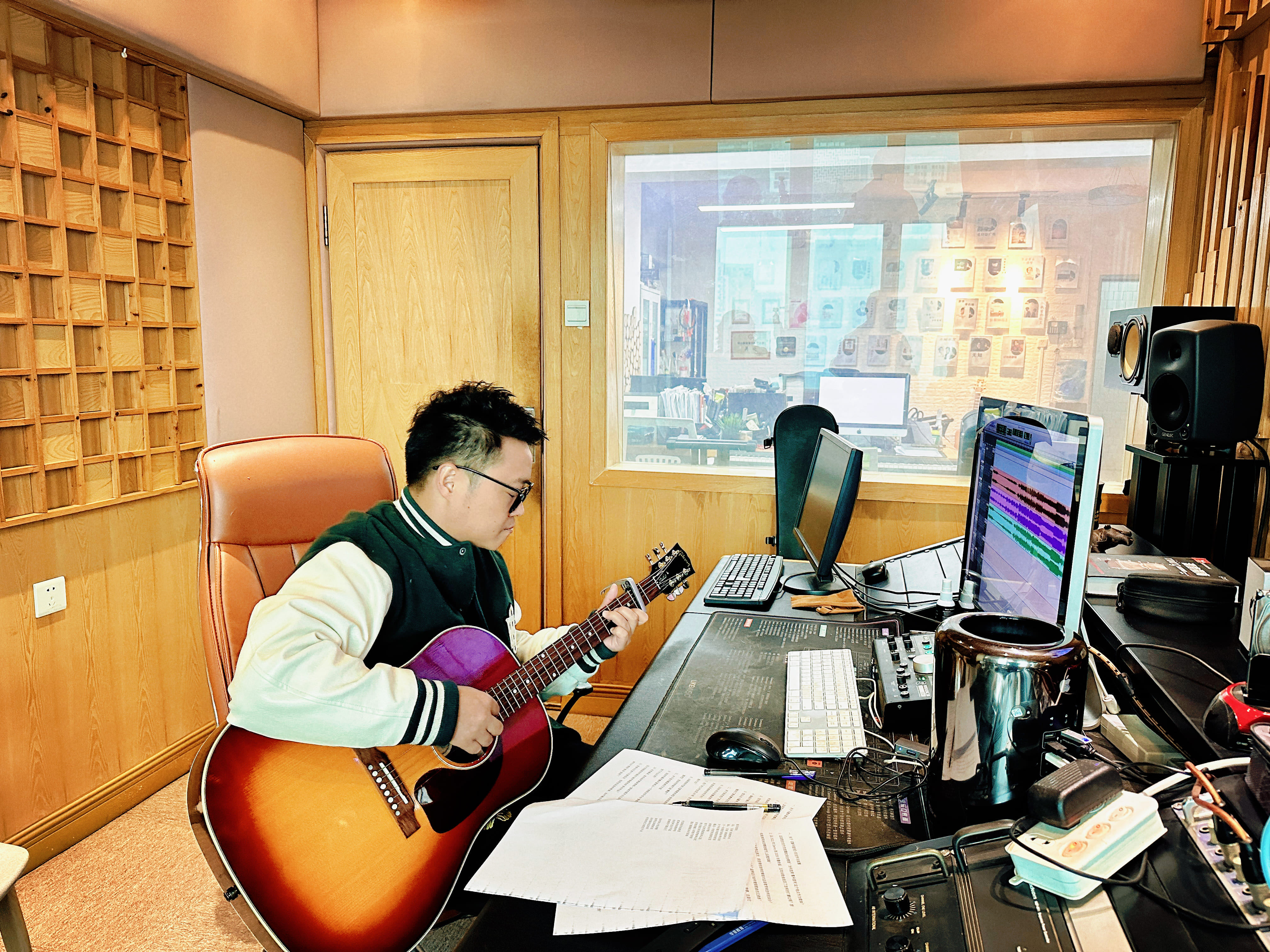
Wu Huan highly praises Guangzhou for its inclusivity, openness, and global connectivity. The city boasts both vibrant everyday life and a complete music industry chain. (Photo provided by the interviewee)
(Report by Hu Ruozhang, Reporter from Ta Kung Wen Wei Net, in Guangzhou) "Next stop: Jiahe Wanggang." This subway announcement, etched into the memories of countless Guangzhou residents, has been transformed into a deeply resonant hit song, thanks to the lyrics and composition by Wu Huan and the soulful performance by Hailai Amu. This winter, shortly after its release,
Jiahe Wanggang has surpassed 1 billion views, becoming the most popular city-themed single at the start of 2026 and once again putting Guangzhou in the spotlight of the public's musical narrative.
The creation of this song is intertwined with the profound bonds between two musicians and Guangzhou. Back in 2020, the singer Hailai Amu traveled to Guangzhou, brimming with aspirations, and was deeply impressed by the Jiahe Wanggang station. "I arrived at a place called Jiahe Wanggang. To its north lies the airport, and to its south, the railway station. That's why many people say Jiahe Wanggang is a place where you set off for a promising future, yet may bid farewell with no definite reunion. But I also believe that as long as spring is not delayed, we will meet again someday." As for Wu Huan, the songwriter and composer, he has spent twenty years in Guangzhou. In 2006, he resolutely chose Guangzhou over an opportunity in Beijing, solely because this city embodied his passion for Cantopop and Hong Kong films, making it the closest place to his musical dreams. Today, he has written over a thousand songs here. His relatives and friends back home jokingly call him a "Lingnan-style" Guangzhou local, and he speaks of the city with immense gratitude and affection.
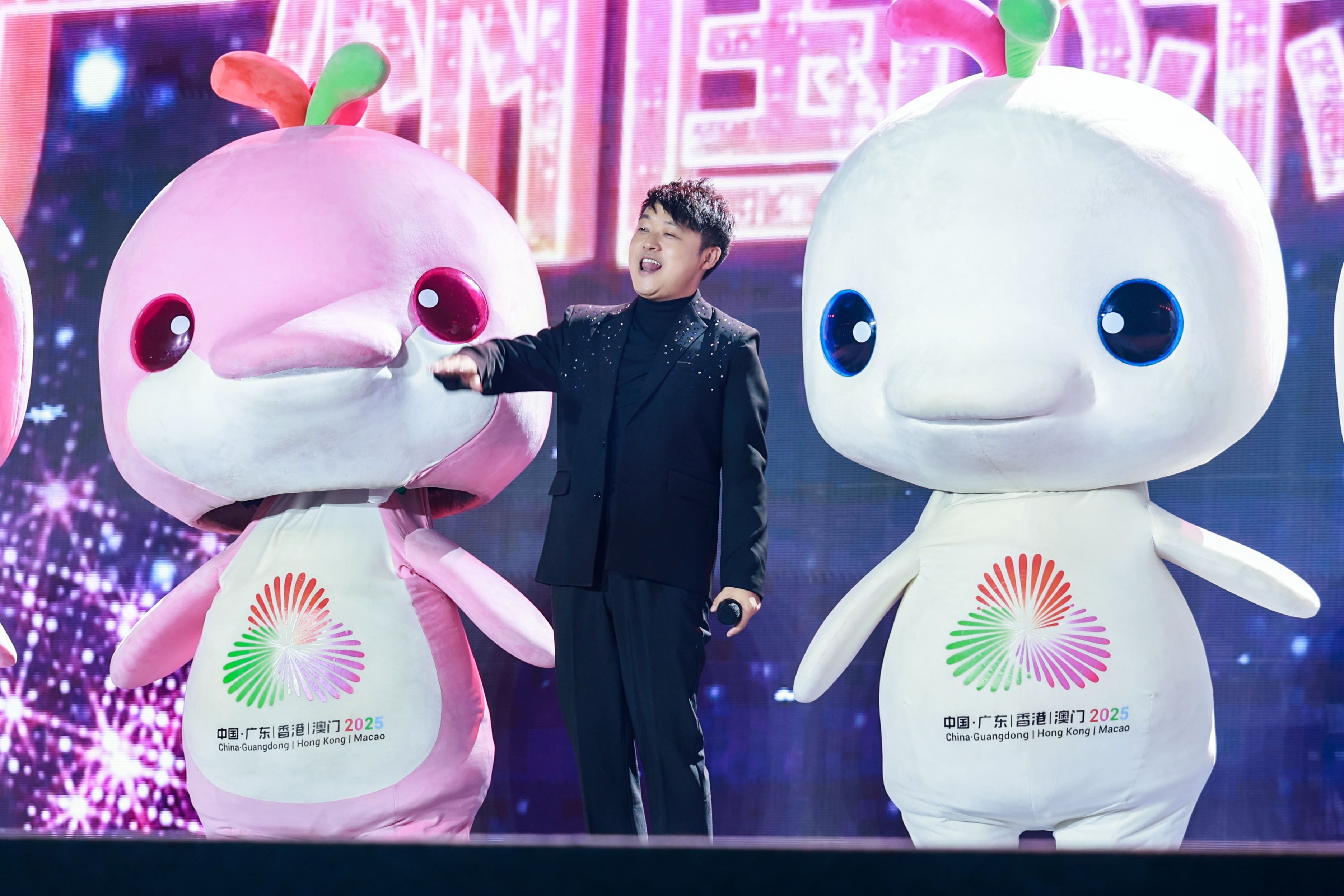
Wu Huan has also composed a promotional song for the 15th National Games. (Photo provided by the interviewee)
"Anyone from anywhere in the world can find a stage and fertile ground to thrive in Guangzhou, as long as they work hard and pursue their dreams with passion," Wu Huan stated frankly. The inclusivity and vitality of Guangzhou have given him the confidence to dedicate himself to music for two decades. The unique charm of Cantonese Opera blending with pop music, the sense of security brought by the delicious food and lively street life, and the perseverance and passion conveyed by sports events have all subtly become the temperament and strength embedded in his melodies. What is even more remarkable is that Guangzhou has a well-established music industry chain, covering every link from lyric writing, composition, recording and production to copyright trading. This comprehensive support has allowed him to focus wholeheartedly on creating music, enabling him to "make a decent and comfortable living from music for twenty years." In his view, what truly retains creators in a city is its solid industrial foundation and humanistic warmth.
From its conception in 2021 to its release in 2026,
Jiahe Wanggang underwent five years of meticulous refinement, a crystallization of the professionalism and sincerity of Wu Huan and Hailai Amu. This is not their first collaboration. Wu Huan has been involved in the arrangement and production of Hailai Amu's music since the singer's debut album. Years of tacit understanding have made them thoroughly familiar with each other's creative styles and vocal characteristics. Over the five years, the two have communicated and revised the work countless times. Hailai Amu took the lead in polishing the lyrics, with his exceptional sensitivity to the audience's emotions and a keen grasp of public sentiments. Wu Huan, on the other hand, focused on crafting the arrangement and melodies, revisiting every detail of the arrangement and every line of the lyrics repeatedly, all to make the work strike a deeper emotional chord with the public.
Wu Huan noted that the most significant creative shift between the original version and the final one was the change in narrative perspective – shifting from a third-person observer of partings on the subway to a first-person "I" singing from personal experience. Lyrics such as "I can't move on from the past that had you in it" and "I stand there, eyes red with tears" are straightforward yet deeply touching. They give tangible expression to every feeling of regret, longing, and reluctance, endowing the song with greater emotional resonance.
"The song's popularity would not have been possible without Hailai Amu's voice," Wu Huan emphasized. Hailai Amu's distinctive vocals are the finishing touch of the track, perfectly blending subtle sorrow with restrained power. The explosive chorus is understated yet strikes straight to the heart, allowing listeners to feel a glimmer of warmth amid melancholy, which aptly interprets the song's emotional core.
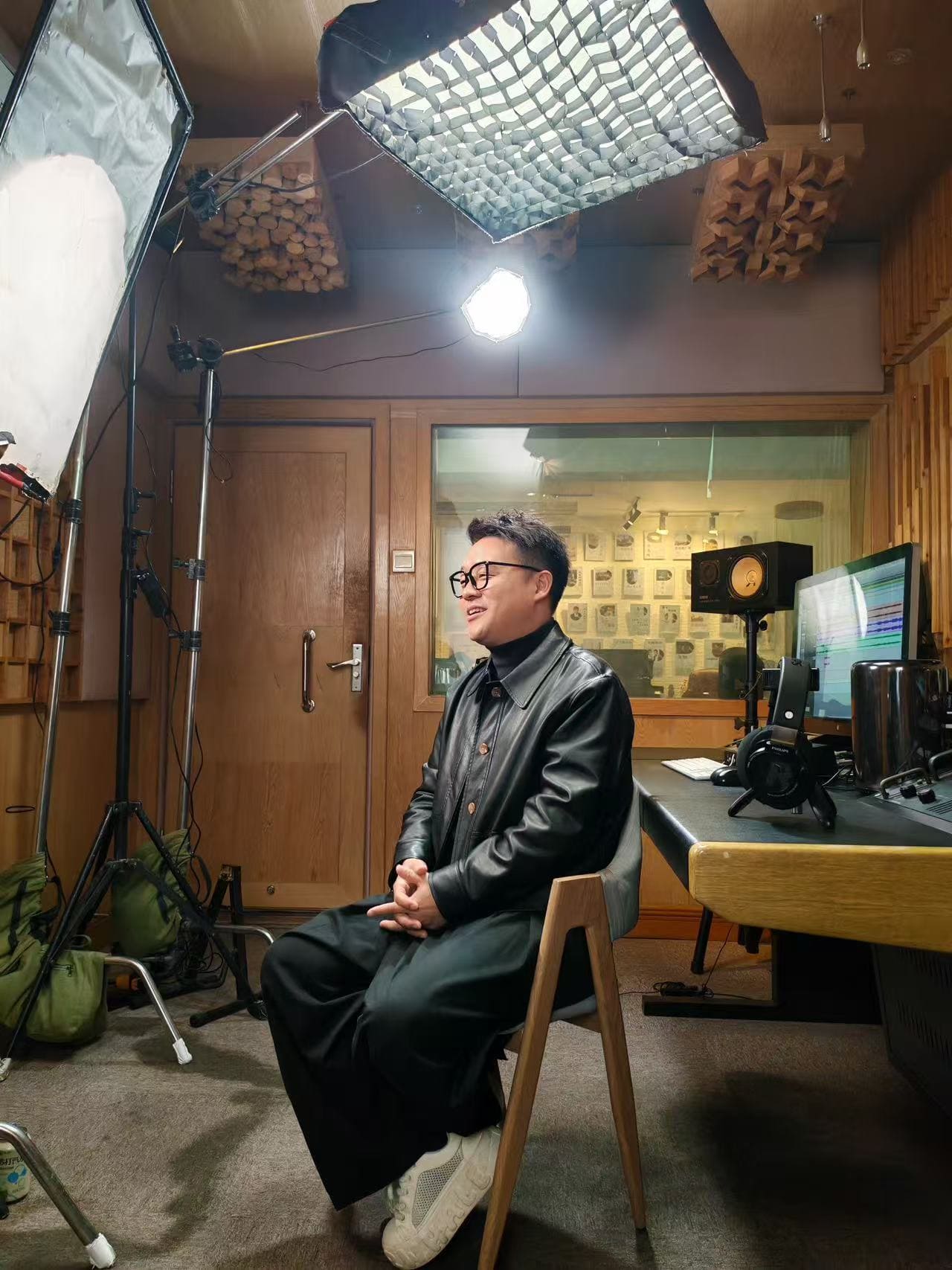
Musician Wu Huan has been developing his career in Guangzhou for 20 years, creating more than a thousand songs. (Photo provided by the interviewee)
In Wu Huan's opinion, the rapid rise of
Jiahe Wanggang is both a stroke of luck and an inevitable outcome – a revival of collective memory and a resonance with the city's spirit. Taking the landmark of Jiahe Wanggang as a starting point, the song weaves together the youthful stories of countless strivers who have come to Guangzhou. The platform has witnessed countless partings and reunions, while the streets and alleys of Guangzhou have preserved their sweat and dreams. The melody sings not merely of a place name, but of ordinary dream-chasers – of every one of us who has struggled and grown in this city. "Rather than saying people miss Jiahe Wanggang, it is more accurate to say they miss the stories of their own struggles back then." It is this precise capture of ordinary people's emotions that allows everyone who has fought for their dreams in Guangzhou to see themselves in the melody.
The runaway success of
Jiahe Wanggang has also revealed Guangzhou's long-nurtured urban vitality to the public and raised new expectations for pop music narratives in the Greater Bay Area. Some have expressed the hope that Guangzhou will produce more works like
Jiahe Wanggang, turning landmarks such as Tiyu Xilu and Shipaidong into melodic stories. In response, Wu Huan smiled and said that the original creation was not intended to highlight landmarks. However, as a musician rooted in the Greater Bay Area, he will continue to write about Guangzhou and the Greater Bay Area. In his eyes, every time Guangzhou gains widespread attention online is a natural occurrence, without premeditation, fully reflecting the city's authenticity and vitality. Looking ahead, he hopes to explore the unique charm of Guangzhou and the Greater Bay Area through lighter and more diverse musical art forms. He aims to help more people understand the city's inclusivity and perseverance, as well as the Greater Bay Area's vibrant local culture and international flair through music, so that the stories of the Greater Bay Area can be heard by more people through melodies.